New Jersey Lawmakers Push Casino Expansion to Meadowlands Racetrack Amid New York Threat
Written by Sam Powell · Apr 23, 2026

New Jersey Lawmakers Push Casino Expansion to Meadowlands Racetrack Amid New York Threat
New York's Moves Ignite Debate Across the Hudson
New York state's recent green lights for casinos in Queens and the Bronx have sent ripples through New Jersey's gaming landscape, prompting lawmakers there to dust off plans for slots at the iconic Meadowlands Racetrack in East Rutherford; these developments, which include three downstate casino licenses awarded in December 2022 but only now advancing toward construction, stand to siphon gaming dollars from Atlantic City, where nine casinos generated $2.8 billion in gross gaming revenue last year alone, down from peaks over $5 billion a decade ago because competition heats up and tourists chase brighter lights closer to home.
But here's the thing: observers note how New York's aggressive expansion, with projects like Resorts World in Queens already drawing crowds since its 2022 sports betting launch and full casino builds eyeing 2025 openings, threatens to undercut New Jersey's edge; data from the New Jersey Division of Gaming Enforcement reveals Atlantic City's slots and table games pulled in $160 million in March 2024, yet year-over-year figures show a 4% dip as regional rivals multiply, so lawmakers now scramble to fortify the state's position before revenue streams dry up further.
Senate Resolutions Take Center Stage
Senate Concurrent Resolutions 31 and 66, introduced in the current legislative session, aim straight at amending New Jersey's constitution to permit slot machines and other casino games at existing racetracks like the Meadowlands; these measures, sponsored by senators such as Joe Cryan and Vin Gopal, bypass full casino builds by targeting horse racing venues, where slots could pair with live thoroughbred racing to create hybrid destinations without upending Atlantic City's monopoly on full-scale resorts.
What's interesting is the precision here: SCR 31 focuses on authorizing video lottery terminals—essentially slots under a different name—at Meadowlands and Freehold Raceway, while SCR 66 broadens the scope to allow table games too, although both require two-thirds legislative approval followed by voter sign-off in a statewide referendum; proponents argue this setup revives fading racetracks, where attendance has plummeted 70% since 2000 amid off-track betting and sports wagering shifts, turning them into year-round economic engines rather than seasonal relics.
Jeffrey Gural Charts the Vision
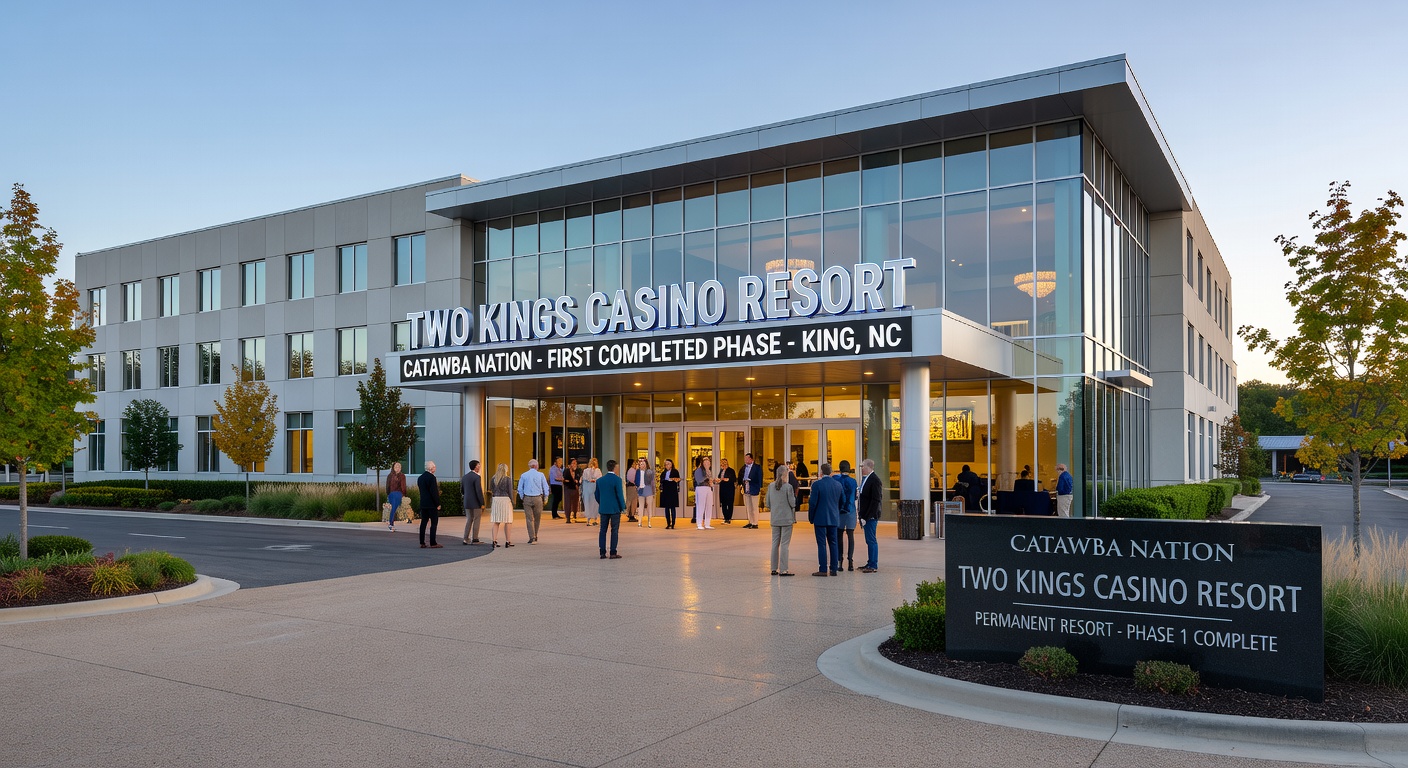
Racetrack owner Jeffrey Gural, who controls the Meadowlands through his New Meadowlands Racetrack subsidiary, champions this push with a blueprint for transformation; he envisions slots fueling a sprawling complex complete with hotels, entertainment arenas, convention centers, and even NFL-adjacent events since the track sits adjacent to MetLife Stadium, home to the Giants and Jets, creating synergies that could draw 10 million visitors annually once slots spin up.
Gural's track record bolsters his case: under his ownership since 2010, the Meadowlands hosted the Breeders' Cup in 2013, drawing record purses, yet horse betting revenue lingers at $200 million yearly statewide while slots in neighboring states like Pennsylvania rake in billions; he points to Pennsylvania's Rivers Casino near Philadelphia, which launched in 2009 and now exceeds $300 million annually, as proof that racetrack casinos stabilize operations without cannibalizing urban hubs like Atlantic City.
And take one expert who studied similar expansions: researchers at the (American Gaming Association's 2023 State of the States report) found that 11 U.S. states with racetrack casinos saw average revenue jumps of 25% post-slots, blending gaming with racing to offset declines in both; Gural leverages this data, warning that without action, New Jersey risks losing $500 million in potential tax dollars as New Yorkers stay home.
Navigating the Hurdles: Politics, Public Vote, and Timeline
Path to slots at Meadowlands demands more than enthusiasm, though: both resolutions need passage through the Senate and Assembly with supermajority votes, then a public referendum no sooner than November 2025, but insiders peg real momentum post-2026 FIFA World Cup, whose U.S. matches—including potential knockout rounds at MetLife—could spotlight the area through June 2026; April 2026 brings qualifiers and buzz building toward the tournament's June 11 kickoff in Los Angeles, positioning Meadowlands as a pre-game hub if infrastructure upgrades align.
Opposition simmers from Atlantic City stakeholders, who fear revenue splits—casinos there already lobby against expansions, citing past referendums like 2011's failed North Jersey casino bid that lost 58-42 amid coastal loyalty; yet polls from (Rutgers University's Eagleton Institute, 2024) show 52% public support for racetrack gaming now, up from 2011, driven by budget pressures and sports betting normalization since 2018's Supreme Court win.
Turns out economic forecasts add weight: a 2023 study by the (Urban Redevelopment Authority) projects 2,500 jobs from Meadowlands slots, plus $100 million in annual taxes funneled to seniors and education, mirroring Delaware's success where racetrack casinos contribute 40% of state gaming revenue; lawmakers like Assemblyman Ralph Caputo echo this, noting how New York's three new casinos could capture 20% of the tri-state market unless New Jersey counters swiftly.
Broader Context: Gaming Revenue Wars and Regional Shifts
New Jersey's gaming scene evolved dramatically since 1976's Atlantic City legalization, peaking at $5.2 billion in 2006 before online poker in 2013 and sports betting in 2018 reshaped flows; today, iGaming and sports wagering outpace bricks-and-mortar by 2-to-1, with DraftKings and FanDuel hubs in Hoboken thriving, yet land-based slots crave diversification as Pennsylvania's 16 casinos hoard $4.5 billion yearly.
So observers watch closely: Meadowlands sits on 150 acres with infrastructure for 3,000 slots initially, scalable to 5,000, per Gural's filings; historical precedents abound, like New York's own Resorts World at Aqueduct Racetrack, which hit $1 billion in its first full year post-2011 slots debut, proving the model works without diluting Manhattan dreams.
People who've tracked this beat know the stakes: Atlantic City's 2023 visitor count hit 27 million, but per-capita spend dips as day-trippers from New York opt for closer options; data indicates a 15% cross-border gaming shift already underway, accelerated by MTA casino proposals in the Bronx that promise 1,000 rooms and 6,500 slots by 2027.
Potential Ripple Effects on Jobs, Tourism, and Beyond
Expansion talks spotlight jobs too: Gural promises 1,800 direct positions at Meadowlands, from dealers to hospitality staff, building on current 800 employees during racing seasons; unions like UNITE HERE back the plan, citing Pennsylvania's Parx Casino at Keeneland Raceway, which added 1,200 roles since 2009 while boosting local purses 50% through slot cross-subsidies.
Yet challenges persist: environmental reviews loom for Hudson Riverfront expansions, and traffic modeling predicts 20,000 daily vehicles near Routes 3 and 17; still, FIFA 2026 offers a wildcard, with MetLife hosting eight matches and Meadowlands primed as an entertainment annex, especially if slots fund upgrades before April 2026's tournament hype peaks.
That's where the rubber meets the road for lawmakers: balancing Atlantic City's pleas with northern growth, all while New York's clock ticks toward full casino openings that could redirect $1 billion in tri-state wagers annually.
Looking Ahead: Referendum on the Horizon
As resolutions advance through committees—SCR 31 cleared its first hearing in March 2024—eyes turn to fall sessions where bipartisan support could gel; public votes historically hinge on messaging, with 1980s casino amendments passing 60% amid recession relief promises, whereas 2016's online expansion squeaked by at 52%.
The reality is clear: New Jersey confronts a pivotal moment, where racetrack slots might not just save horse racing but redefine gaming borders, countering New York's surge while leveraging Meadowlands' prime locale; experts who've modeled scenarios project $400 million in first-year revenue, stabilizing taxes amid post-pandemic recoveries, and setting stages for whatever FIFA brings in 2026.
In the end, voters hold the cards, deciding if slots transform East Rutherford into New Jersey's next gaming frontier or if Atlantic City remains the sole beacon.